RV Park vs. Campground: What Is the Difference?
RV park or campground — which is right for your trip? Understanding the key differences helps you choose the right place to stay and avoid surprises.

RV Park vs. Campground: What Is the Difference?
If you are new to RV travel — or even if you have been doing it for years — the terminology can get confusing. RV park, campground, RV resort, campsite, full hookup site, primitive site — what does it all mean, and which one is right for your trip?
Here is a clear breakdown of the differences between RV parks and campgrounds, and how to choose the right type of stay for your rig and your travel style.
The Basic Distinction
At the most fundamental level:
- An RV park is a facility designed specifically for recreational vehicles. It prioritizes hookups, paved or gravel pads, and amenities that make RV living comfortable — electric, water, sewer, laundry, Wi-Fi.
- A campground is a broader term that can mean almost anything — from a primitive tent-only site in a national forest to a full-service facility that accommodates both tents and RVs.
The overlap between the two is significant, which is why the terms are often used interchangeably. But understanding the distinctions helps you know what to expect before you arrive.
Types of RV Stays: A Breakdown
Full Hookup RV Parks
This is what most people picture when they hear "RV park." A full hookup park provides water, electric (30-amp and/or 50-amp), and sewer at each site. These parks are designed for RVers who want the comforts of home — running water, climate control, and the ability to stay for days, weeks, or months without managing tank levels.
Full hookup parks are the right choice for:
- Extended stays (a week or longer)
- Large rigs that need 50-amp service
- Travelers who prioritize comfort and convenience
- Full-timers who live in their RV year-round
Partial Hookup Sites
Partial hookup sites offer water and electric but no sewer connection. You will need to manage your gray and black water tanks and use the park's dump station when they fill up. This is workable for short stays but becomes inconvenient on longer trips.
Dry Camping / Boondocking
Dry camping (also called boondocking) means no hookups at all. You rely entirely on your rig's onboard systems — fresh water tank, battery bank, generator or solar for power. This is common at dispersed camping areas on public lands, some national park campgrounds, and Walmart parking lots (where permitted).
Dry camping is great for experienced RVers who want solitude and do not mind managing their resources carefully. It is not ideal for large rigs with high power demands or for travelers who want a comfortable, low-maintenance stay.
National and State Park Campgrounds
National and state park campgrounds vary enormously. Some offer full hookups; many offer only water and electric or nothing at all. They are often in spectacular natural settings, but they come with trade-offs:
- Sites are frequently shorter and narrower than dedicated RV parks — not always big rig friendly
- Reservations can be difficult to get, especially at popular parks
- Amenities are typically minimal compared to private RV parks
- Stays are often limited to 14 days
If you are driving a large Class A or a long fifth wheel, always check site dimensions at national and state park campgrounds before booking. Many were designed for smaller rigs.
RV Resorts
RV resorts are the premium end of the spectrum — think resort-style pools, clubhouses, fitness centers, planned activities, and manicured landscaping. They tend to be significantly more expensive than standard RV parks and are often age-restricted (55+) communities.
Resorts are a great fit for travelers who want a social, amenity-rich experience and are willing to pay for it. They are less practical for travelers who just need a clean, functional place to park their rig near a destination.
Private RV Parks
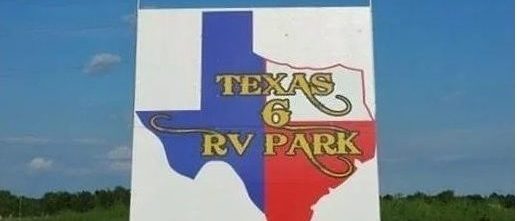
Private RV parks — like Texas 6 RV Park — sit between the resort and the campground on the spectrum. They offer full hookups, reliable amenities, and competitive rates without the resort price tag. They are designed for practical, comfortable stays ranging from one night to several months.
This is the most common type of RV park for travelers passing through or staying near a city.
How to Choose: Key Questions to Ask
When you are deciding between an RV park and a campground for a specific trip, these questions help narrow it down:
How long are you staying? One or two nights? Almost any option works. A week or more? Full hookups become much more important for comfort.
What size is your rig? Large Class A motorhomes and long fifth wheels need big rig friendly sites — pull-throughs, wide lanes, 50-amp service. Many campgrounds and state parks cannot accommodate them safely.
What do you need to do from your base? If you are near a city and planning day trips, a private RV park with easy highway access is usually the most practical choice. If you want to hike and be immersed in nature, a state or national park campground might be worth the trade-offs.
What is your budget? Full hookup private RV parks typically run $45–$65/night. State park campgrounds with hookups are often $25–$40/night but have more limitations. RV resorts can run $80–$150/night or more.
Do you need Wi-Fi or reliable electric? If you work remotely or need consistent power, a private full hookup RV park is the right choice. Campgrounds — especially public ones — often have unreliable or nonexistent Wi-Fi and variable electric service.
The Bottom Line
The terms "RV park" and "campground" overlap, but the practical differences matter when you are planning a trip. For most RVers — especially those with larger rigs, longer stays, or a need for reliable hookups — a full hookup private RV park is the most comfortable and practical choice.
For short stays in natural settings, national and state park campgrounds offer experiences that private parks cannot replicate. The best RV travelers know how to use both, choosing the right type of stay for each leg of their trip.
Staying Near Houston? Texas 6 RV Park Has You Covered
Texas 6 RV Park is a full hookup private RV park located at 15545 Hwy 6, Rosharon, TX 77583 — just 1.3 miles west of HWY 288, south of Houston. With 104 big rig friendly sites, full hookups at every site, and rates starting at $55/night, it is built for comfortable, practical stays in the greater Houston area.
Call 281-972-9223 to check availability or ask any questions before you arrive. View our full rates or contact us online to reserve your site.
Explore Topics
Written by
Texas 6 RV Park
Content creator and writer sharing insights and stories.

